2026 IARPT Conference
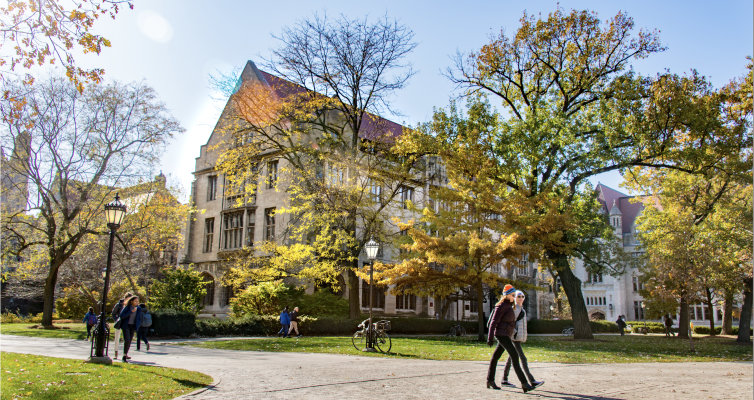
Experience: Philosophical Topics from Dewey for Inquiry with Other Pragmatists, Process Philosophers, Naturalists, and Religious Liberals
Place: Chicago, IL
Dates: June 15-18, 2026
Program Chair: Greylyn Hydinger
Local Hosts: Lisa Landoe Hedrick and Mike Hogue
Location:
The University of Chicago Divinity School
1025 E 58th Street
Chicago, IL 60637
Conference Hotel: Hyatt Place Chicago South
Plenary Lectures: Robert Cummings Neville, Nancy Frankenberry, and Bill Hart
Register for the conference here.
The conference schedule is available here. Note that all conference events will be held in Swift Hall within the University of Chicago Divinity School. Paper sessions and Plenary Lectures will be in Room 106 of Swift Hall.
Click here for the conference guide to suggested restaurants and activities that our local hosts put together.
The Institute for American Religious and Philosophical Thought (IARPT) is pleased to provide the Call for Papers for its 2026 meeting, to be held in Chicago, IL, June 15–18, 2026. The meeting theme is Experience: Philosophical Topics from Dewey for Inquiry with Other Pragmatists, Process Philosophers, Naturalists, and Religious Liberals. As the title suggests, we are interested in the theories of experience that can help us address key philosophical topics. John Dewey’s thought unites most of the strands of philosophy central to IARPT: American Pragmatism, Process Philosophy, Naturalism, Empiricism, and Religious Liberalism. Given Dewey’s ability to bring together key interests of our group and, given that our 2026 meeting will take place in Chicago, one of Dewey’s intellectual homes, Dewey’s systematic treatment of experience will provide us with at least the following philosophical topics for inquiry: (1) Experience and Philosophy of Mind, Psychology, & Neurobiology; (2) Experience and Aesthetics; (3) Experience and Education; (4) Experience and Science & Democracy; and (5) Experience and Religious Naturalism. How do theories of experience—as articulated by pragmatists, process philosophers, naturalists, empiricists, and religious liberals—address the following major topics and broad questions?
Broad Questions:
- Experience and Philosophy of Mind, Psychology & Neurobiology:
- How can pragmatism, process thought, naturalisms, and empiricisms help us think about philosophy of mind and psychology in terms of experience and vice versa?
- What can philosophy learn about experience from advances in the science, such as psychology and neurobiology?
- Where are these sciences reductionistic, and what can they learn from philosophy?
- Experience and Aesthetics
- How is the aesthetic experienced? How can experience be aestheticized?
- What is the relationship between live creatures, the act of expression, the expressive object, and the experience of the expression?
- How can aesthetics simultaneously express experiences of the world and provide a new way of experiencing the world?
- Can aesthetic experience be isolated to specific domains of life (or culture or civilization) or does all experience have an aesthetic dimension in consummatory values?
- Experience and Education
- What is the role of experience in education? What should learning environments include? How structured should they be? Should the skills that people learn be preprogrammed into the learning environment? Should environments be problematic so that learners will invent new skills to formulate and accomplish their purposes, while also identifying which ends are worth pursuing? What roles might habits play in the identification and pursuit of worthwhile ends in a learning environment?
- How can habits facilitate experience in these environments, and how can problematic aspects of the learning environment lead to novel habits? Why does knowledge “not keep any better than fish” (Whitehead)?
- What is the purpose of studying, for example, Roman culture (the Dewey–Montessori debate)? Is it to enrich our own experience or to expand our experience so as to include the experience of others? More broadly, how can education facilitate intercultural experiences? How can experience be expanded to include, rather than appropriate, other experiences?
- How do we learn to experience the important values in a value laden environment? How can education facilitate experience of these consummatory values? Does education necessarily force one set of values on learners? What values and principles might help learners develop wisdom to make, pick up on, or experience connections between domains of knowledge that are often treated as disparate? What is the connection between imagination and fact?
- Experience and Science & Democracy
- Dewey and Peirce are somewhat unusual in Western Philosophy (perhaps only Mill and Habermas would agree) in the claim that the scientific method presents the best model for solving social problems or questions that arise in the humanities (Peirce’s Neglected Argument). Are social problems already overrun by science and technology (as many Continental philosophers would argue)? What does Dewey, or Peirce, mean in terms of applying the model of science to social problems? How does this method allow for communal problem solving with all members contributing equally?
- How do both democratic and scientific forms of social organization allow us to see things philosophically that could not or cannot be seen in other forms of social organization?
- Is democracy (when actually functioning) the widest inclusion of diverse experience in interaction with one another? Does modern science (when actually functioning) do the same thing in terms of experiences within the constraints of experiments?
- Experience and Religious Naturalism
- What is unique about religious experience? Are religious experience and religion inherently connected?
- Can and, if so, how do we experience ultimacy? How do we experience normative ideals that might guide growth in better directions?
- Can religious experiences be terrifying and not scaled to human flourishing?
- How do Dewey, Peirce, James, Whitehead, and other figures influential within IARPT differ (or agree) in their approaches to religious experience?
These questions and potential paper topics are suggestive, not exhaustive. Neo-Pragmatic critiques of the Classical Pragmatists and Process Philosophers are welcome. Proposals on related questions are also welcome. Moreover, as always, we will consider proposals related to the intellectual traditions of particular interest to IARPT (e.g., empiricism, naturalism, pragmatism, process philosophy, and liberal theology).
IARPT meetings are traditionally structured around paper readings of approximately twenty minutes and a few longer invited keynote lectures, but we also invite creative approaches to conference sessions. Proposals for panels, debates, discussions, fishbowls, etc., are welcome. Proposals should contain a descriptive title and a brief (no more than 500 words) but informative and readable description of the paper to be presented, with some indication of why the proposer considers the paper an important contribution to the theme of the conference. Proposals should also include a brief (150-word) author bio.
Applicants should also note that the conference is in-person, and we are committed to maintaining the collegiality IARPT meetings are known for. For this reason, we are not accepting proposals for papers to be delivered remotely or virtually.
All proposals should be sent in Word format to the program chair: Greylyn Hydinger (hydinger001@gannon.edu). The deadline for submissions has been extended to March 1, 2026. Any questions about the program themes and layout should also be directed to Greylyn Hydinger.
Potential funding for travel and lodging is available in the form of the W. Creighton Peden Scholarship; please click here for more information, and please indicate your interest in this option upon the submission of your proposal.
Download the call for papers here.
This page will be updated as new information becomes available, so please check back as the conference approaches.